In-House vs Outsourced Game Development: A Practical Comparison
As game projects grow in complexity and scale, studios face a critical decision: should development be handled internally or delegated to external partners? Choosing between in-house teams and Outsourced Game Development can significantly impact cost, quality, timelines, and long-term scalability. As a technology-focused company working closely with global game studios, SUNWIN INFORMATION TECHNOLOGY L.L.C examines this comparison from a practical, real-world perspective.
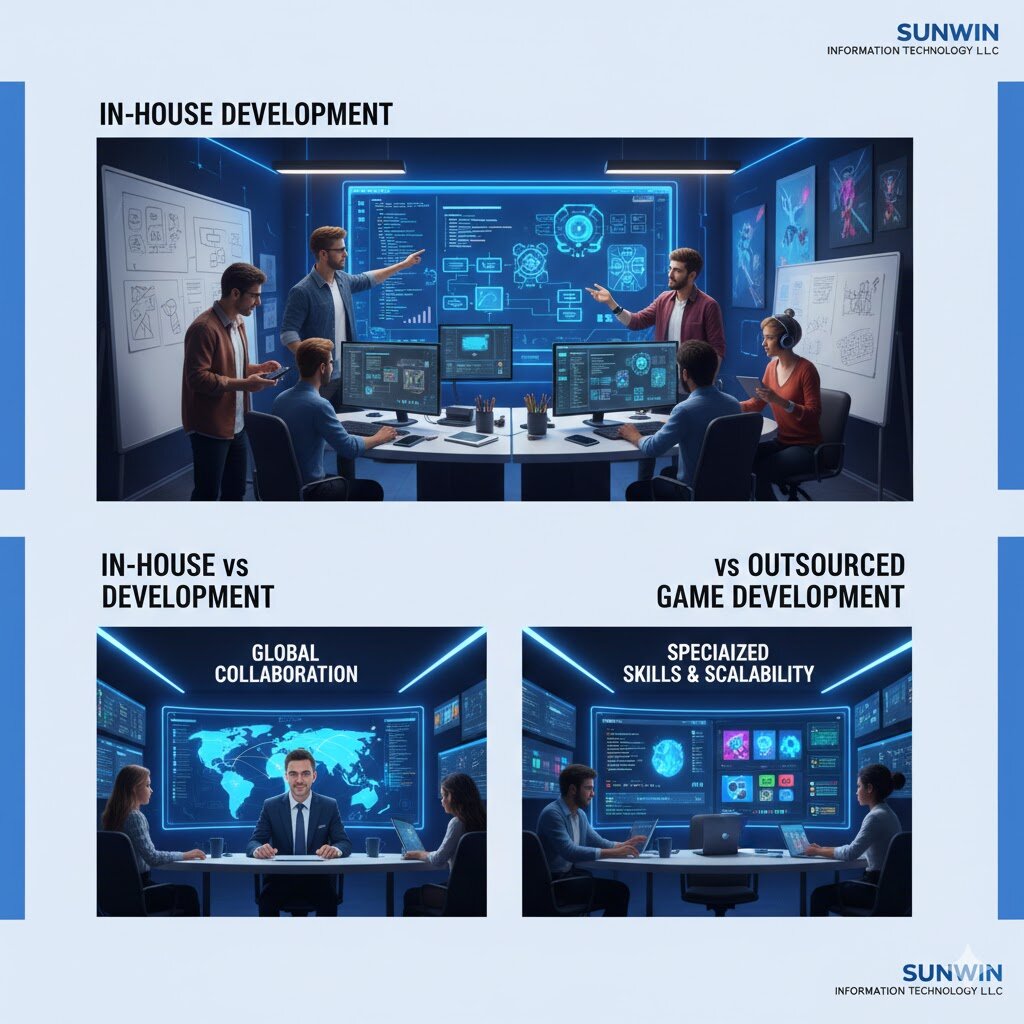
Understanding In-House and Outsourced Game Development
What Is In-House Game Development?
In-house development refers to building and maintaining an internal team that handles most or all aspects of game production. This includes design, programming, art, QA, and live operations.
Studios that choose in-house development often value creative control, close collaboration, and deep alignment with company culture.
What Is Outsourced Game Development?
Outsourced Game Development involves partnering with external studios or vendors to support or fully handle parts of the development process. Outsourcing can cover areas such as art creation, engineering, QA, live operations, or even full-cycle development.
This model allows studios to access specialized skills and scale resources without long-term hiring commitments.
Cost and Resource Management
Cost Structure of In-House Development
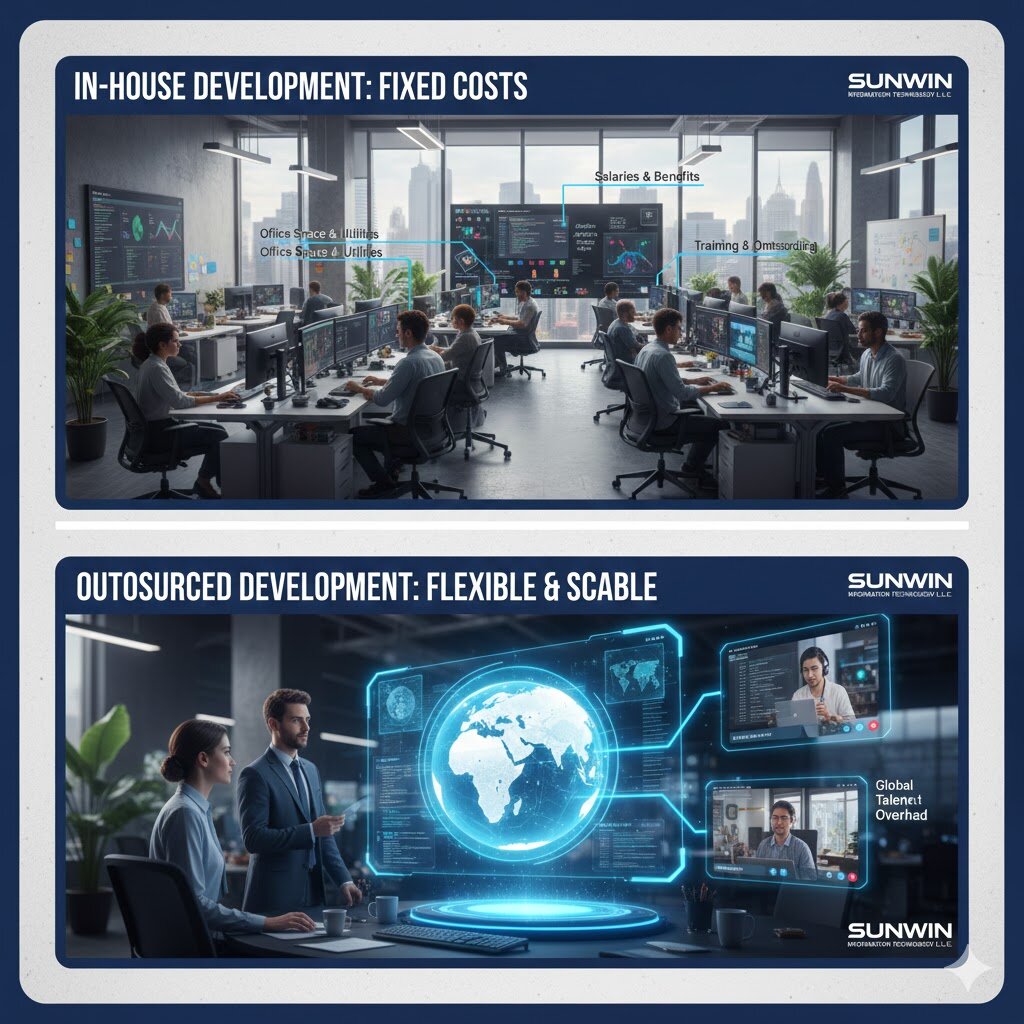
Maintaining an internal team requires significant fixed costs. Salaries, benefits, office space, hardware, and training expenses add up quickly, especially for larger teams.
While in-house teams provide stability, they can be less flexible when project scope changes or demand fluctuates.
Cost Efficiency in Outsourced Game Development
One of the main advantages of Outsourced Game Development is cost flexibility. Studios can scale resources up or down based on project needs, reducing long-term financial risk.
Outsourcing also enables access to global talent pools, often at more competitive rates, without compromising quality.
Control, Communication, and Collaboration
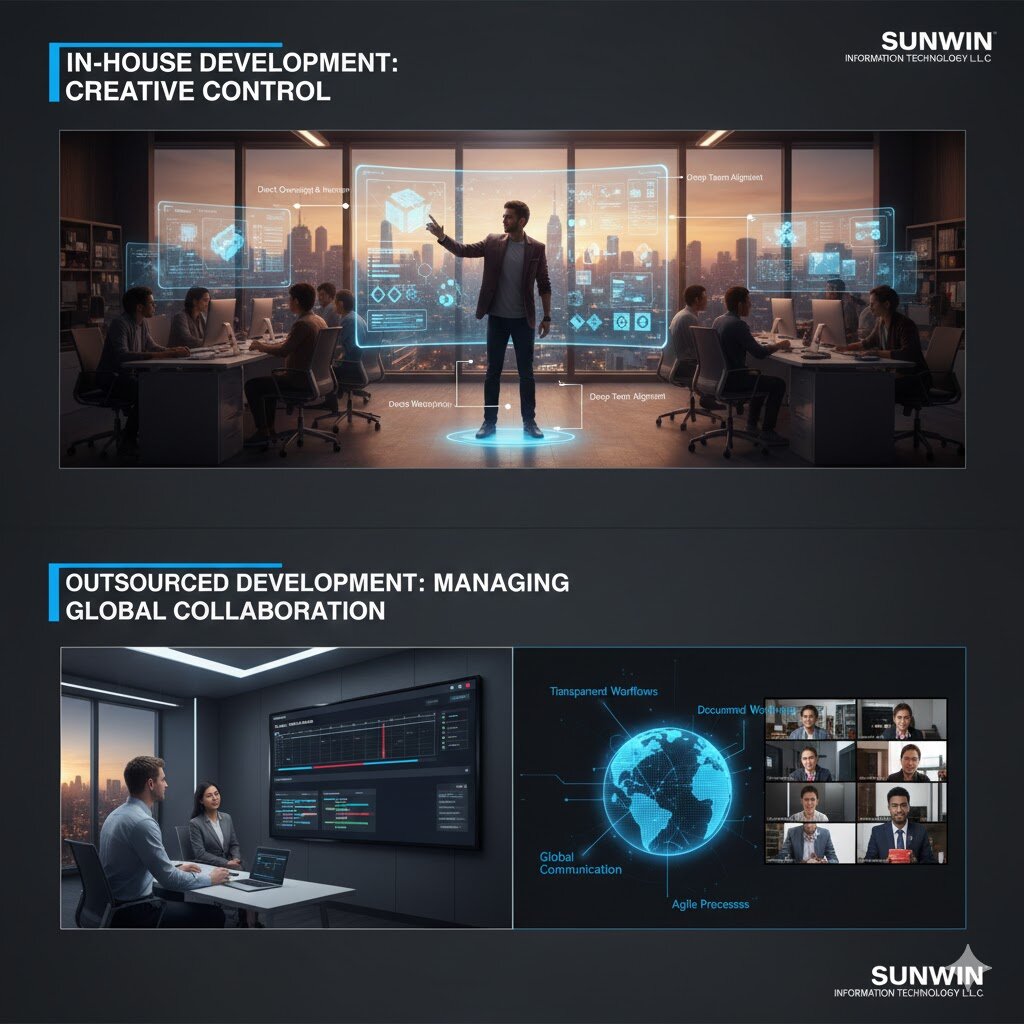
Creative Control in In-House Teams
In-house development offers direct oversight and faster decision-making. Teams work closely together, making it easier to iterate, pivot, and align with creative vision.
This level of control is especially valuable for core gameplay mechanics and proprietary technology.
Managing Collaboration in Outsourced Game Development
With Outsourced Game Development, effective communication becomes critical. Clear documentation, defined milestones, and transparent workflows are essential to ensure alignment.
While physical distance can be a challenge, modern collaboration tools and agile processes help bridge gaps between internal and external teams.
Expertise and Technical Capabilities
Skill Development Within In-House Teams
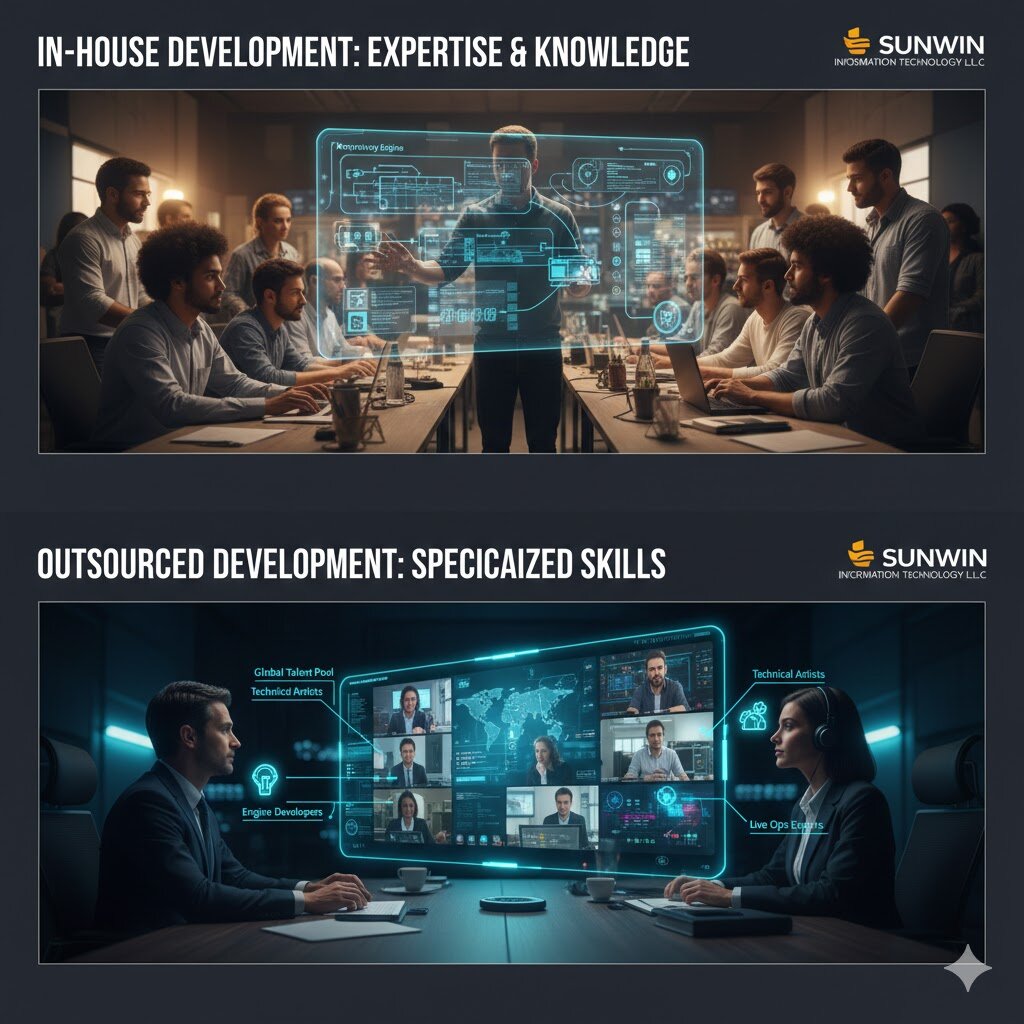
Internal teams build deep institutional knowledge over time through clearly defined responsibilities within modern game development team roles. They gain familiarity with proprietary engines, tools, and workflows that support long-term projects.
However, acquiring niche expertise quickly can be difficult and time-consuming.
Access to Specialized Skills Through Outsourcing
Outsourced Game Development provides immediate access to specialized talent, such as advanced engine developers, technical artists, or live operations experts.
This flexibility is particularly valuable for short-term needs or highly specialized tasks.
Scalability and Production Speed
Scaling In-House Teams
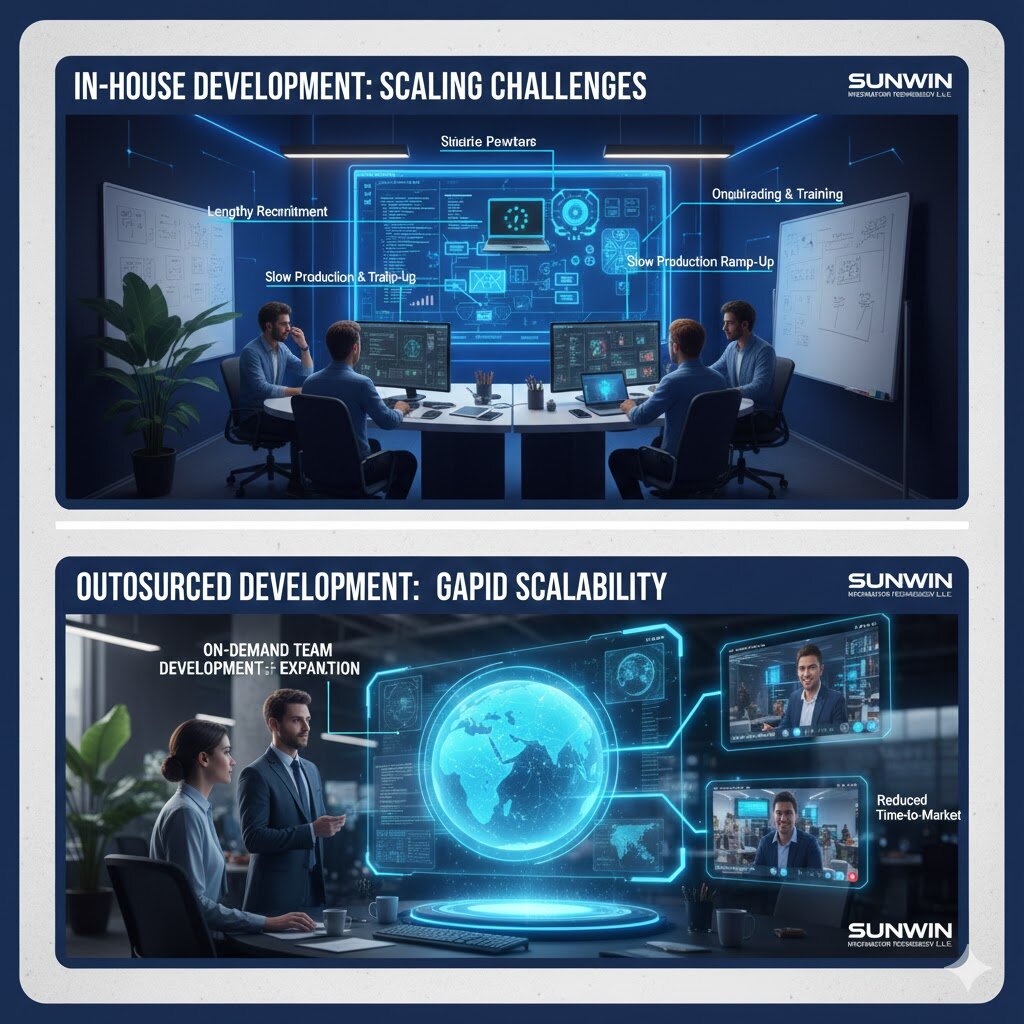
Scaling an internal team often involves lengthy recruitment, onboarding, and training processes. This can slow down production when rapid expansion is required.
Once scaled, downsizing can be equally challenging and costly.
Rapid Scaling With Outsourced Game Development
Outsourcing allows studios to respond quickly to changing project demands. Teams can be expanded or reduced without disrupting core operations.
This agility makes Outsourced Game Development an effective solution for studios managing multiple projects or live service games.
Quality Assurance and Risk Management
Quality Control in In-House Development
In-house teams typically have stronger alignment with quality standards and long-term product vision. Direct oversight simplifies quality control and risk mitigation.
However, limited internal capacity can create bottlenecks during testing and polishing phases.
Risk Distribution Through Outsourcing
Outsourcing helps distribute development risks by leveraging experienced external partners. Many outsourcing studios bring proven pipelines, QA processes, and industry best practices.
A well-chosen Outsourced Game Development partner can reduce delivery risks while maintaining quality, aligning closely with what publishers are looking for in development partners today.
Choosing the Right Model or a Hybrid Approach
When In-House Development Works Best
In-house development is ideal for studios focusing on core IP, proprietary technology, or long-term franchises where consistency and creative ownership are critical.
It works best when studios have stable funding and predictable production pipelines.
When Outsourced Game Development Is the Better Choice
Outsourced Game Development is well-suited for studios seeking flexibility, cost efficiency, and rapid access to talent. It is particularly effective for support roles, specialized tasks, and scaling live operations.
Many modern studios adopt a hybrid model, combining in-house leadership with outsourced execution.
Conclusion
The decision between in-house development and Outsourced Game Development is not about choosing one over the other, but about finding the right balance for each project. Factors such as cost, control, scalability, and expertise all play a role in shaping this choice. By carefully evaluating project goals and operational needs, studios can build development models that maximize efficiency and quality. Through its focus on technology-driven collaboration and scalable solutions, SUNWIN INFORMATION TECHNOLOGY L.L.C continues to support game studios in navigating development strategies that align with today’s evolving gaming landscape.