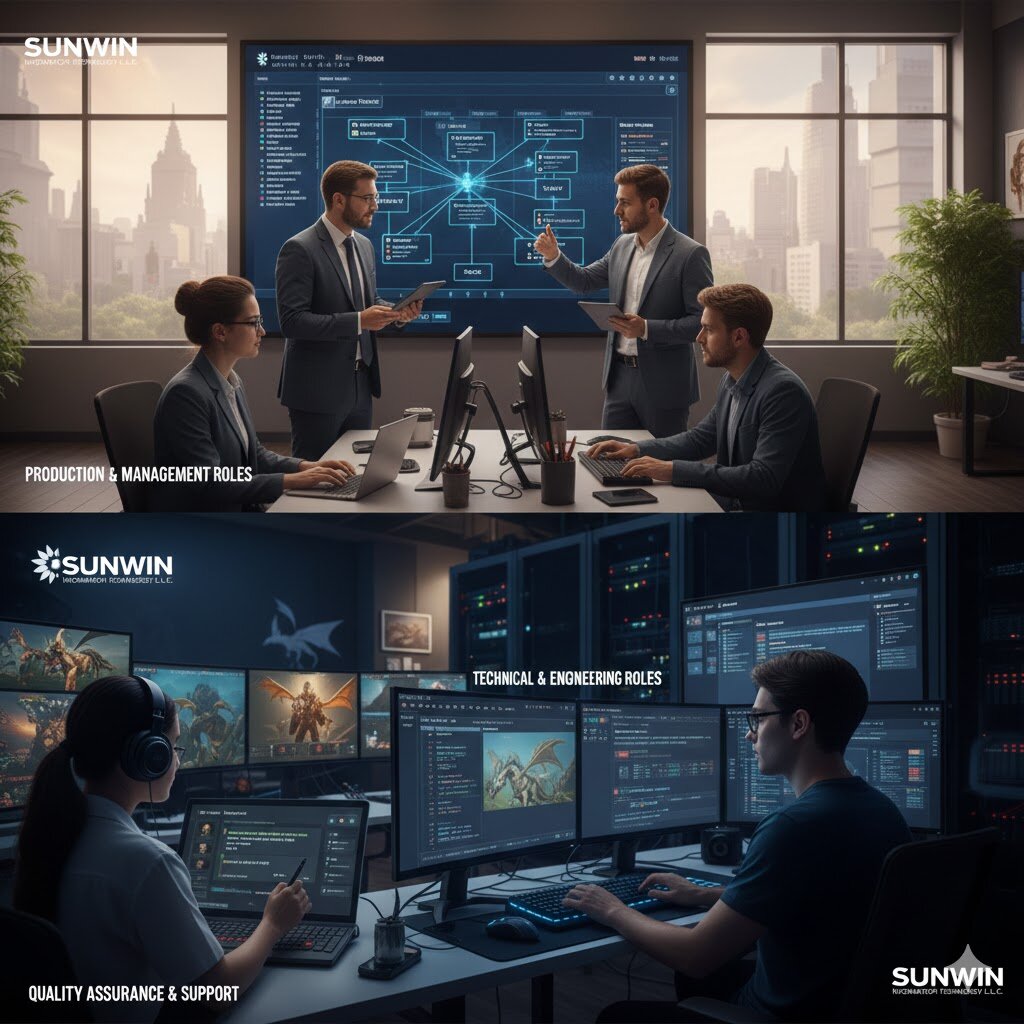
Common Roles in a Modern Game Development Team
Behind every successful game is a well-structured and collaborative development team. Understanding Game Development Team Roles is essential for studios, publishers, and partners looking to manage projects efficiently and deliver high-quality gaming experiences. As a technology-focused company working closely with the gaming industry, SUNWIN INFORMATION TECHNOLOGY L.L.C recognizes the importance of clearly defined roles within modern game development teams.
The Structure of a Modern Game Development Team
Why Defined Roles Matter
Game development is a multidisciplinary process that combines creativity, technology, and project management. Clearly defined Game Development Team Roles help streamline workflows, reduce miscommunication, and ensure accountability across the game development lifecycle.
In modern studios, teams are often flexible, but core responsibilities remain essential for maintaining quality and efficiency.
Team Size and Project Scope
The size and structure of a game development team vary depending on project scope, budget, and platform. Indie teams may combine multiple roles into one position, while larger studios distribute responsibilities across specialized departments.
Regardless of size, understanding key roles is critical to successful collaboration.
Core Creative Roles
Game Designer
The game designer defines the overall vision and gameplay experience. Responsibilities include designing mechanics, rules, levels, and progression systems.
As one of the central Game Development Team Roles, the game designer ensures that gameplay remains engaging, balanced, and aligned with the original concept.
Narrative Designer and Writer
Narrative designers and writers develop the game’s story, characters, dialogue, and world-building elements. This role is especially important in story-driven and role-playing games.
Strong narrative design enhances immersion and emotional connection for players.
Technical and Engineering Roles
Game Programmer / Software Engineer
Programmers are responsible for writing and maintaining the code that powers the game. This includes gameplay systems, physics, AI, networking, and performance optimization.
Within Game Development Team Roles, programmers form the technical backbone of the project.
Engine and Tools Developer
In larger teams, specialized developers focus on engine customization and internal tools. These roles improve workflow efficiency and enable designers and artists to work more effectively.
Tool development is critical for scalability and long-term production efficiency.
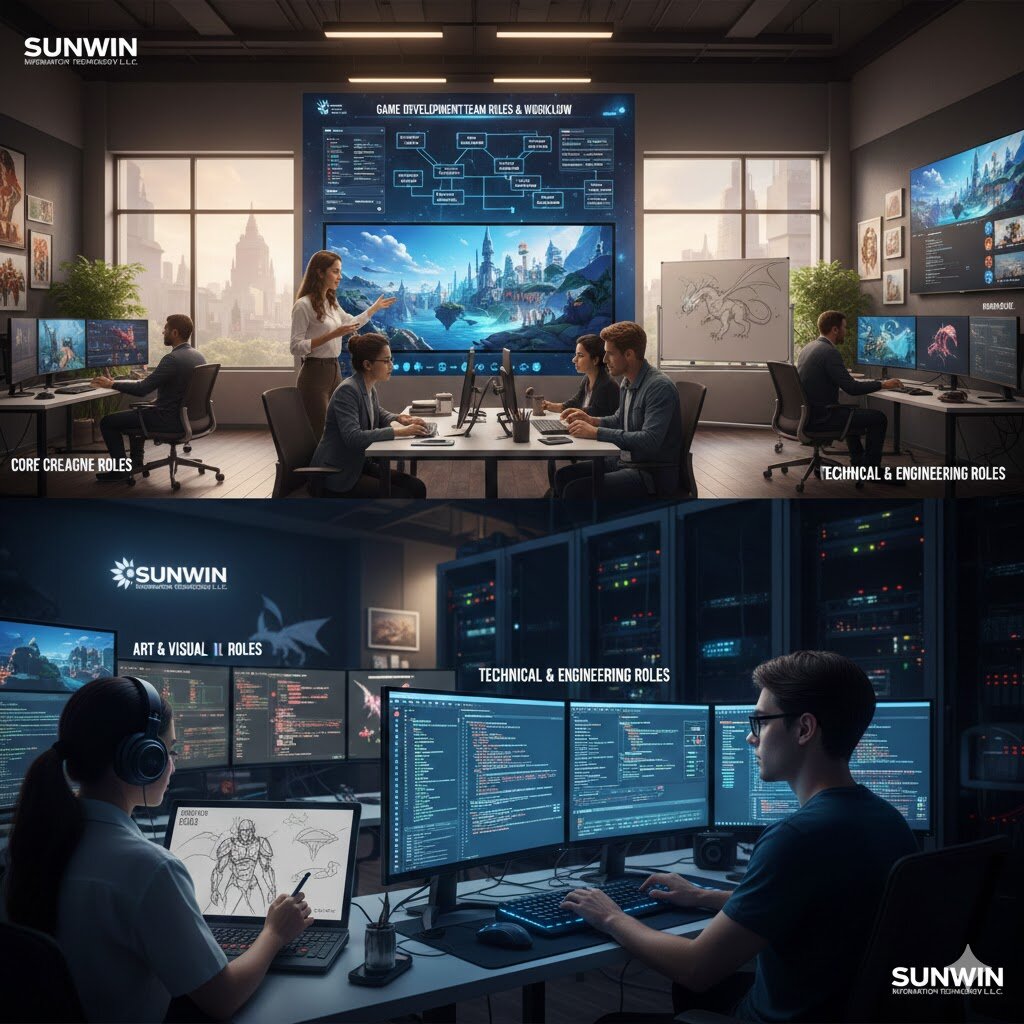
Art and Visual Roles
Concept Artist
Concept artists create early visual representations of characters, environments, and assets. Their work helps define the game’s visual style and artistic direction.
This role supports alignment across art, design, and production teams.
2D/3D Artist and Animator
Artists and animators produce in-game assets such as characters, environments, props, and visual effects. Animators bring these assets to life through movement and interaction.
These Game Development Team Roles are essential for visual quality and player immersion.
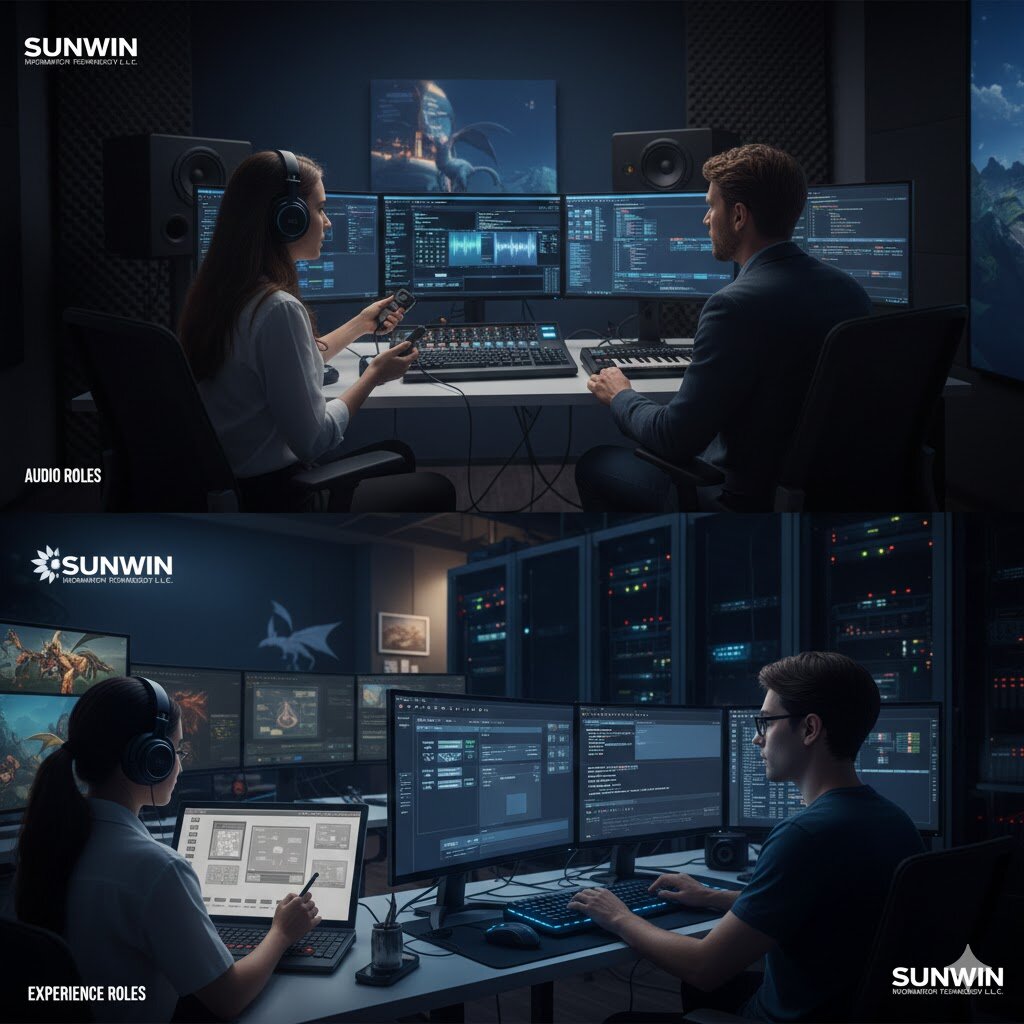
Audio and Experience Roles
Sound Designer and Composer
Sound designers and composers create sound effects, ambient audio, and music that enhance gameplay atmosphere.
Audio plays a crucial role in feedback, immersion, and emotional impact.
User Experience (UX) Designer
UX designers focus on usability, interface design, and player flow. Their goal is to make interactions intuitive and accessible.
Strong UX design improves onboarding, retention, and overall player satisfaction.
Production and Management Roles
Producer and Project Manager
Producers and project managers oversee schedules, budgets, and resource allocation. They coordinate between departments and ensure milestones are met.
Among Game Development Team Roles, this position is critical for keeping projects on track.
Quality Assurance (QA) Tester
QA testers identify bugs, performance issues, and gameplay inconsistencies, reinforcing why quality assurance matters in game development. They ensure the game meets quality standards before release.
Testing is an ongoing process throughout development, not just a final step.
Live Operations and Post-Launch Roles
Live Operations Manager
For online and live service games, live operations managers oversee updates, events, and ongoing content delivery.
This role ensures the game remains stable and engaging after launch.
Community Manager and Support Team
Community managers interact with players, gather feedback, and communicate updates. Support teams handle technical issues and player inquiries.
These roles strengthen player relationships and long-term engagement.
Evolving Game Development Team Roles
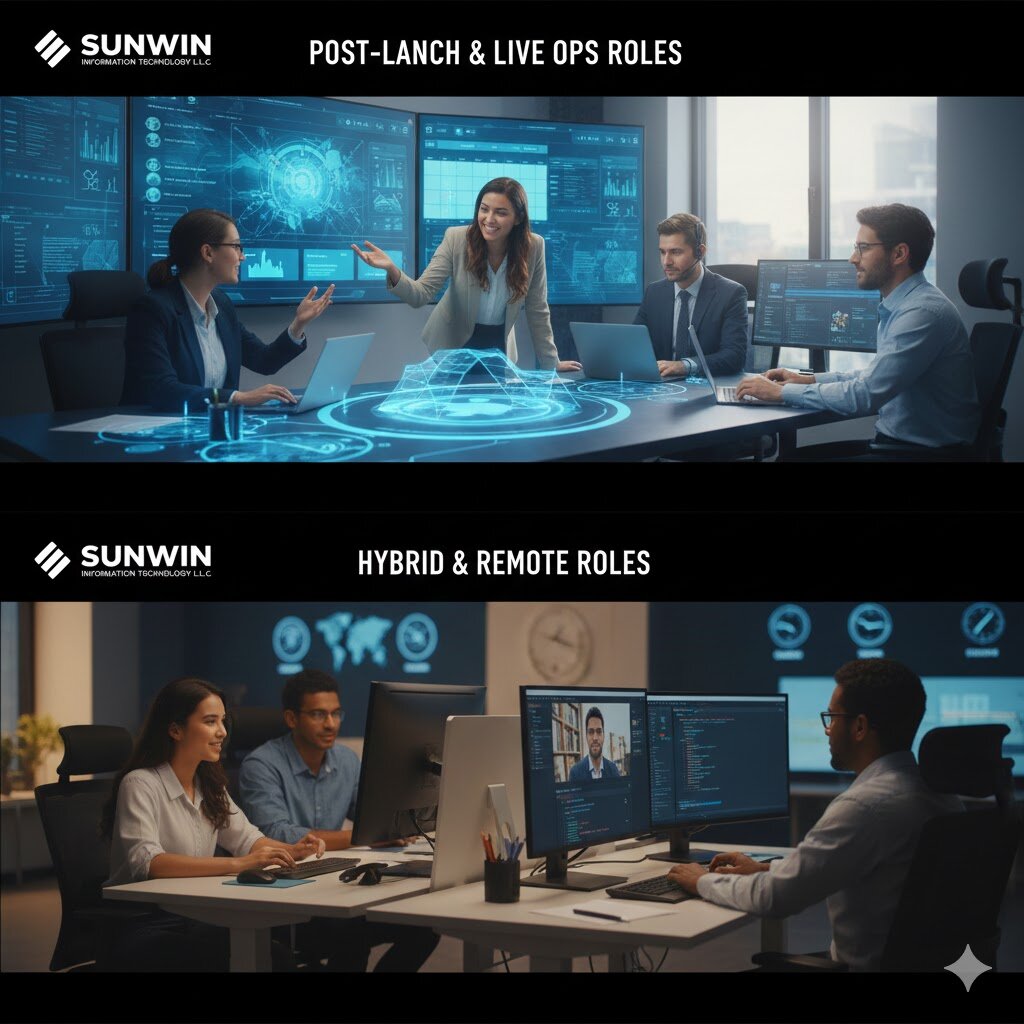
Hybrid and Cross-Functional Roles
Modern studios increasingly adopt hybrid roles, where individuals handle multiple responsibilities. This flexibility is especially common in smaller teams.
Cross-functional collaboration helps teams adapt to changing development needs.
Remote and Global Collaboration
Remote work has expanded access to global talent. Modern Game Development Team Roles often involve collaboration across time zones and cultures.
Effective communication tools and processes are essential in this environment.
Conclusion
Understanding Game Development Team Roles is key to building efficient, creative, and scalable game development operations. From designers and programmers to producers and community managers, each role contributes to the success of a game at different stages of its lifecycle. By promoting clear role definition, collaboration, and adaptability, SUNWIN INFORMATION TECHNOLOGY L.L.C continues to support modern game development teams in delivering high-quality, sustainable gaming experiences across the global market.