The Rise of Live Service Games: An Industry Perspective
Over the past decade, the gaming industry has witnessed a major shift in how games are developed, launched, and sustained. Live Service Games have emerged as one of the most influential business and design models, transforming games from standalone products into long-term digital services. As a technology-focused company operating within the global gaming ecosystem, SUNWIN INFORMATION TECHNOLOGY L.L.C closely follows this evolution to understand how live service games are reshaping the industry.
Understanding the Live Service Games Model
What Are Live Service Games?
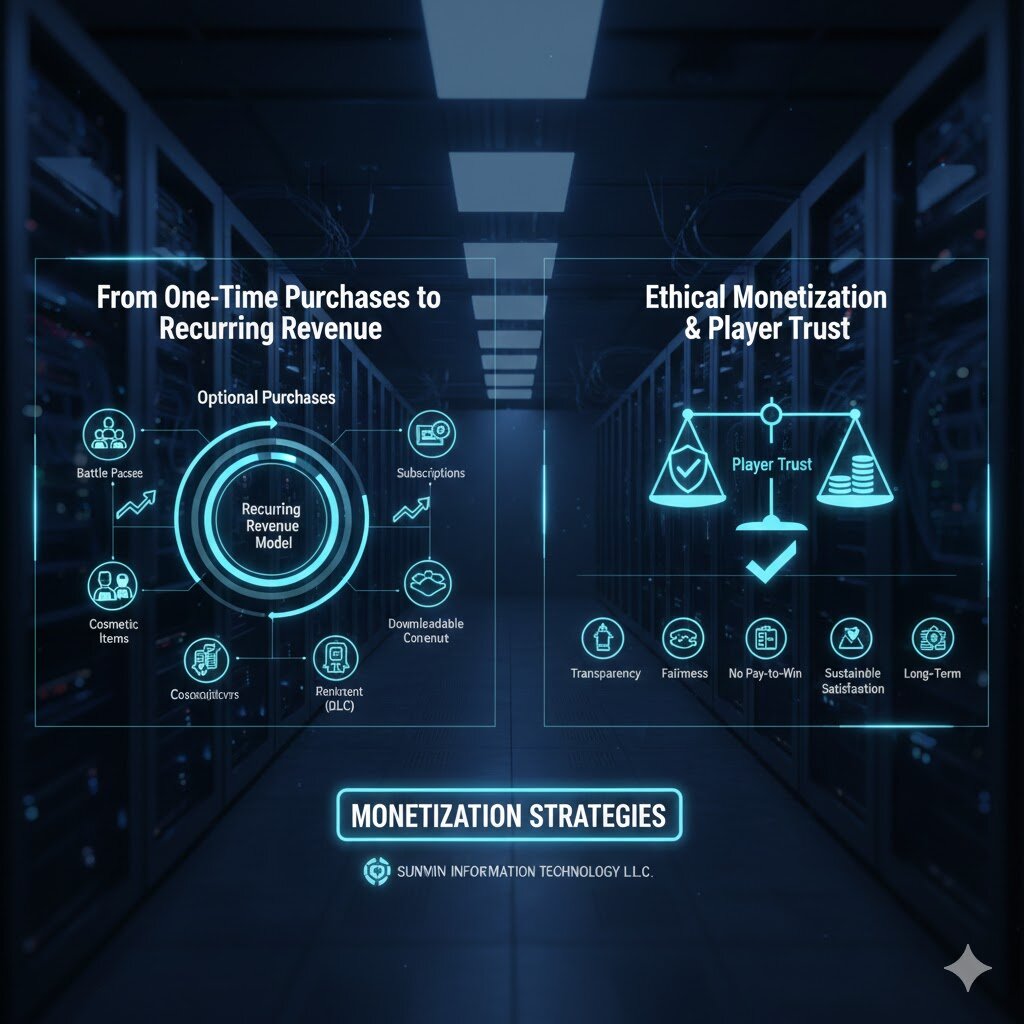
Live Service Games are designed to operate continuously over long periods rather than ending at launch. These games receive regular updates, new content, balance adjustments, and live events that keep players engaged.
Instead of a one-time purchase experience, live service games focus on long-term player retention, community interaction, and ongoing monetization.
Why the Model Gained Popularity
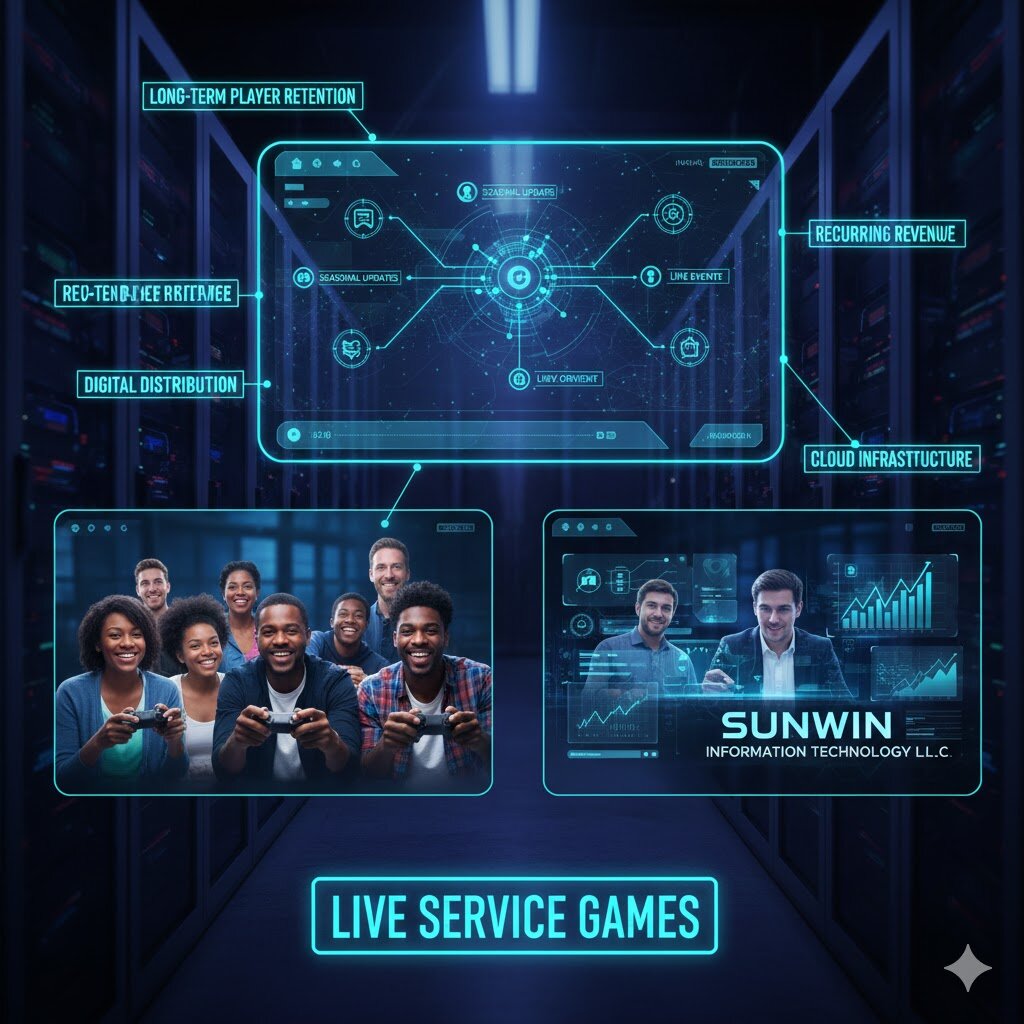
The rise of digital distribution, always-online connectivity, and cloud infrastructure has made live service models more viable than ever. Publishers and developers benefit from predictable revenue streams, while players enjoy evolving content and fresh experiences.
This mutual value exchange has fueled the rapid growth of Live Service Games across multiple platforms.
Key Drivers Behind the Rise of Live Service Games
Changing Player Expectations
Modern players expect games to grow and improve over time. Frequent updates, seasonal content, and limited-time events have become standard expectations rather than optional features.
These evolving demands have pushed developers toward Live Service Games as a way to meet player expectations and maintain long-term engagement.
Advancements in Technology and Infrastructure
Cloud services, scalable servers, and real-time analytics are critical enablers of live service models. These technologies allow developers to deploy updates quickly, monitor player behavior, and respond to issues in real time.
Without this infrastructure, sustaining Live Service Games at scale would not be possible, especially as online gaming services continue to evolve to support persistent and global player communities.
Design and Development Challenges
Continuous Content Production
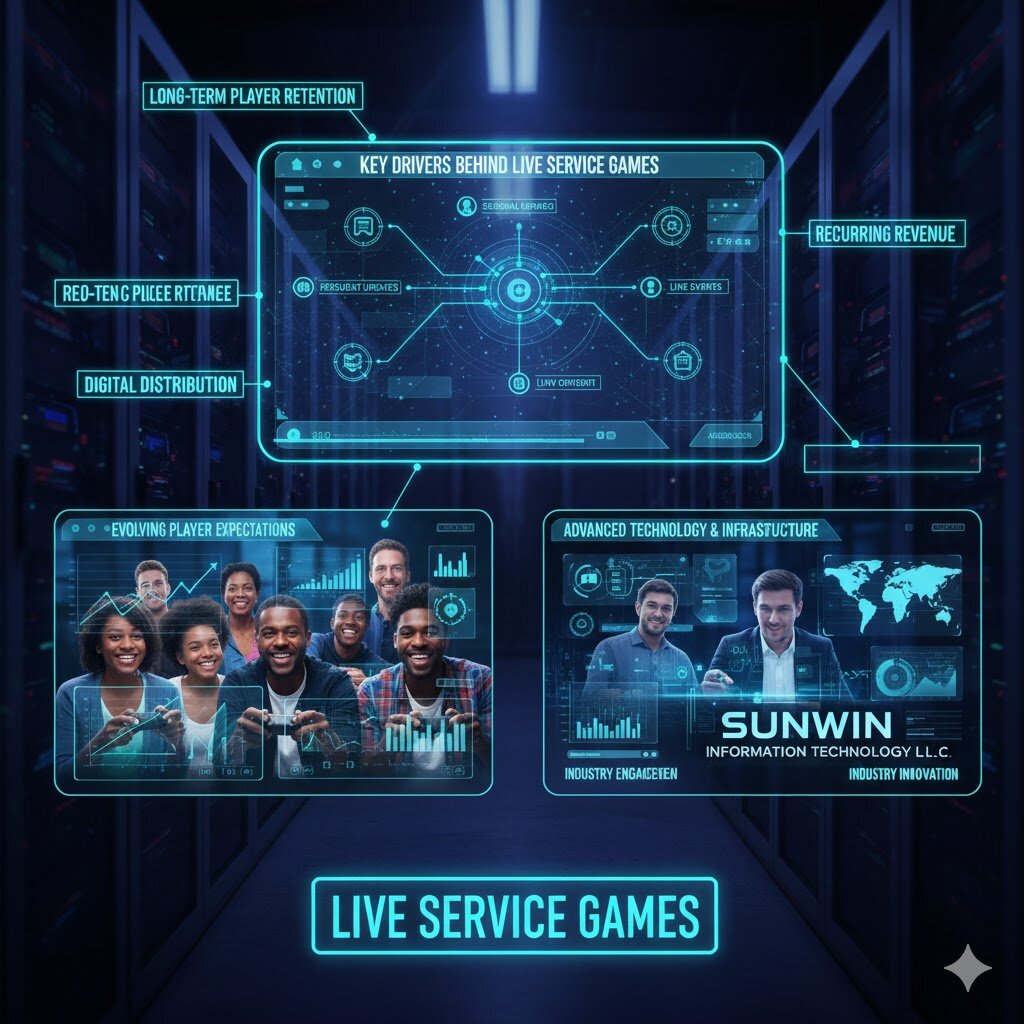
One of the biggest challenges of Live Service Games is maintaining a steady flow of high-quality content, which highlights the importance of understanding LiveOps and post-launch game support. Developers must balance speed, quality, and creativity while avoiding player fatigue.
This requires dedicated live operations teams, long-term content roadmaps, and flexible development pipelines.
Balancing Gameplay and Fairness
Frequent updates and new features can disrupt game balance. Developers must carefully monitor data and player feedback to ensure fair and enjoyable gameplay.
Maintaining balance is essential for preserving trust and long-term engagement in live service environments.
Monetization Strategies in Live Service Games
From One-Time Purchases to Recurring Revenue
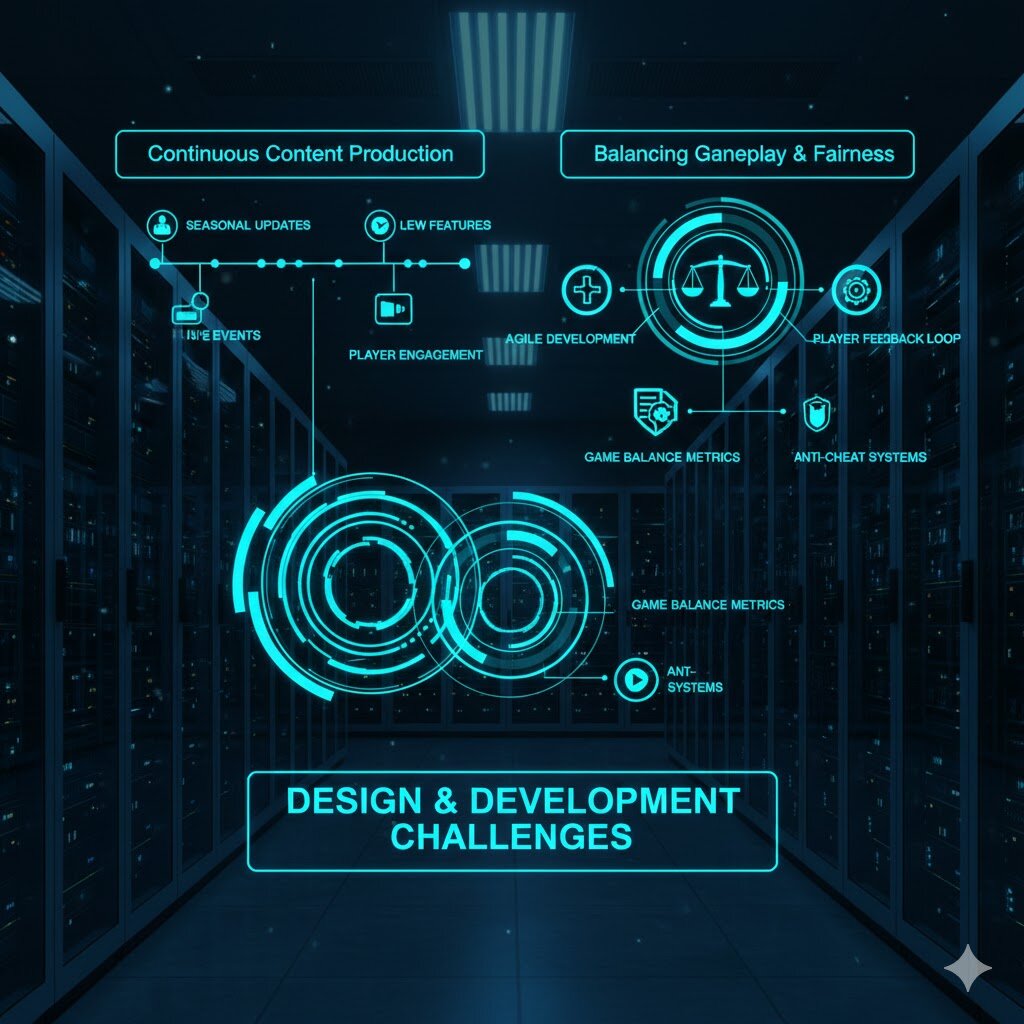
Live Service Games rely on recurring monetization models such as battle passes, subscriptions, cosmetic items, and downloadable content. These systems allow players to choose how they spend while supporting ongoing development.
The focus has shifted toward optional purchases that enhance experience without creating unfair advantages.
Ethical Monetization and Player Trust
As scrutiny around monetization increases, developers are prioritizing transparency and fairness. Ethical monetization practices help build trust and reduce churn.
Sustainable Live Service Games depend on long-term player satisfaction rather than short-term revenue optimization.
Community, Data, and Live Operations
The Role of Community Engagement
Community interaction is central to the success of Live Service Games. Developers actively engage with players through social platforms, forums, and in-game events.
Strong community management helps gather feedback, manage expectations, and foster loyalty.
Data-Driven Decision Making
Live service models generate vast amounts of data. Analytics tools allow developers to track engagement, identify issues, and optimize content strategies.
Data-driven insights are essential for making informed decisions and sustaining Live Service Games over time.
The Future of Live Service Games
Integration of Emerging Technologies
Emerging technologies such as artificial intelligence, cloud-native tools, and cross-platform services are expected to further enhance live service capabilities.
AI-driven personalization and automation will help developers manage complex live environments more efficiently.
Long-Term Sustainability
While the live service model offers significant advantages, sustainability remains a key concern. Not every game is suited for long-term operation, and over-saturation can strain player attention.
Successful Live Service Games will be those that balance innovation, quality, and community trust.
Conclusion
The rise of Live Service Games represents a fundamental shift in how the gaming industry operates. By prioritizing continuous engagement, scalable technology, and ethical monetization, live service models have redefined player expectations and business strategies. As the industry continues to evolve, SUNWIN INFORMATION TECHNOLOGY L.L.C remains committed to understanding and supporting the technologies and systems that enable sustainable, player-focused live service gaming experiences.