How Online Gaming Services Are Evolving
The rapid advancement of digital technology has fundamentally changed how players access and experience games. Online Gaming Services are no longer limited to simple multiplayer platforms; they have evolved into complex ecosystems combining entertainment, social interaction, and advanced infrastructure. As a technology-focused company, SUNWIN INFORMATION TECHNOLOGY L.L.C closely follows these developments to understand how innovation is reshaping online gaming services on a global scale.
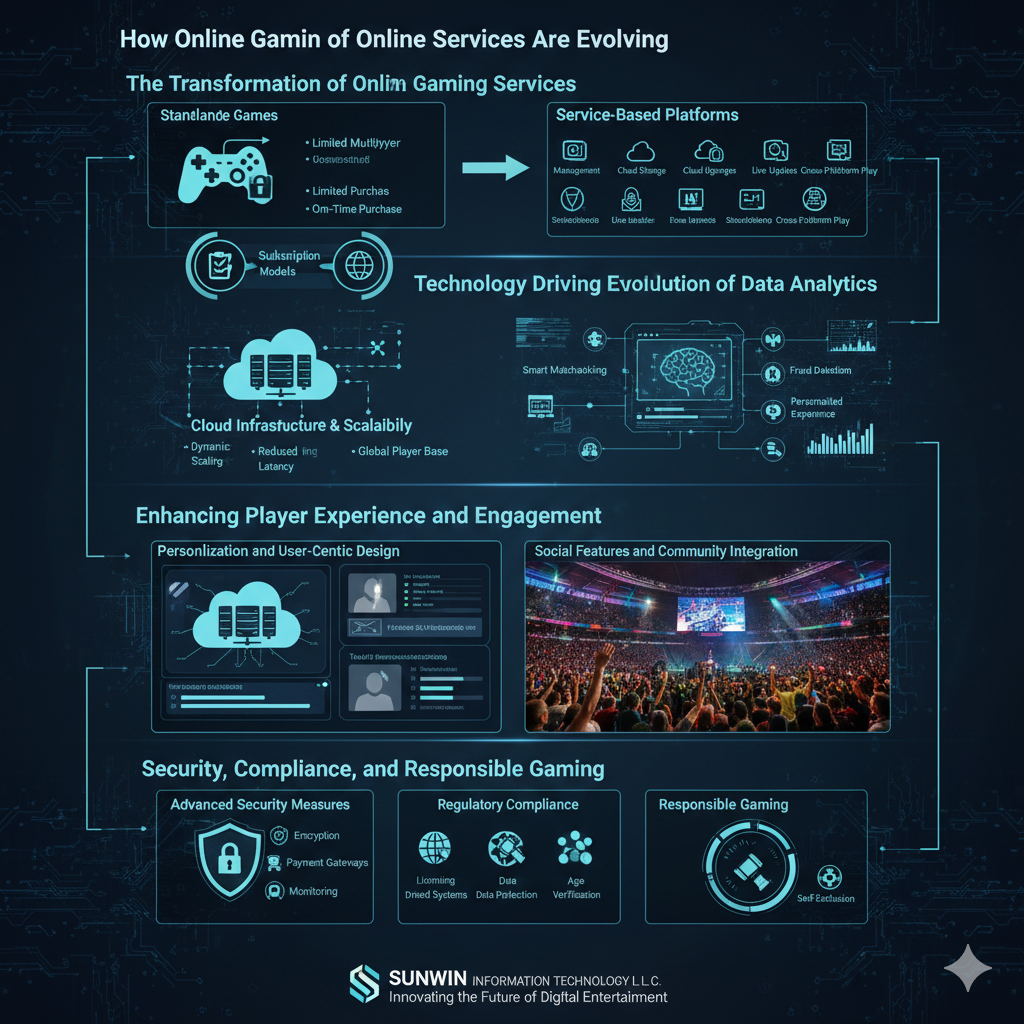
The Transformation of Online Gaming Services
From Standalone Games to Service-Based Platforms
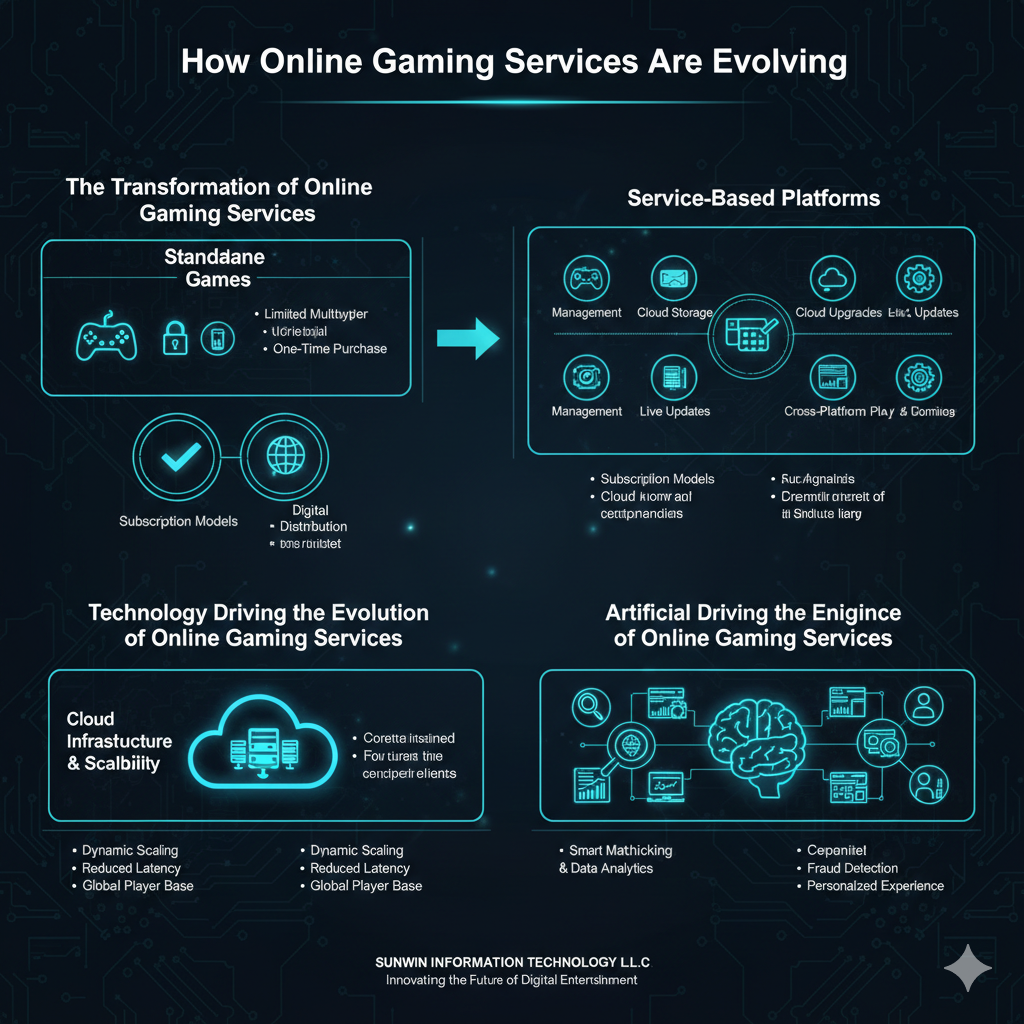
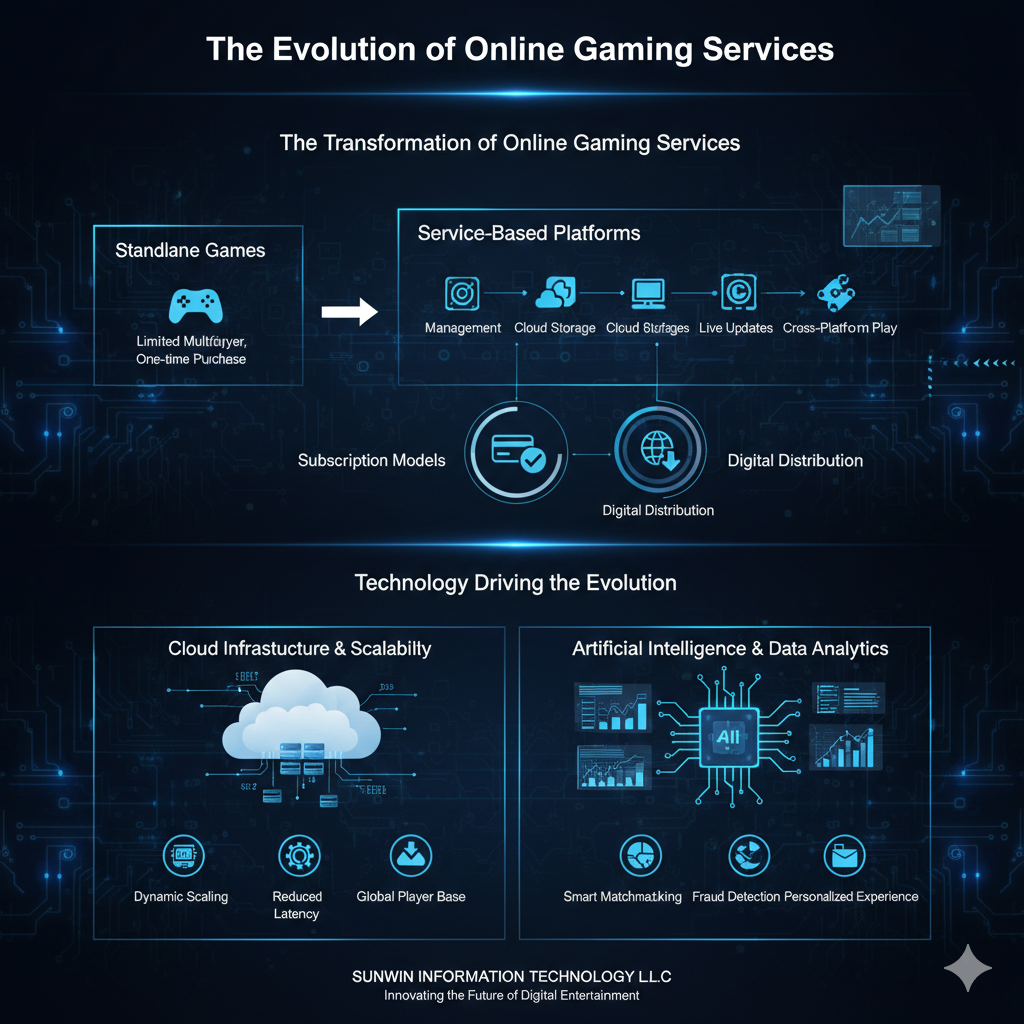
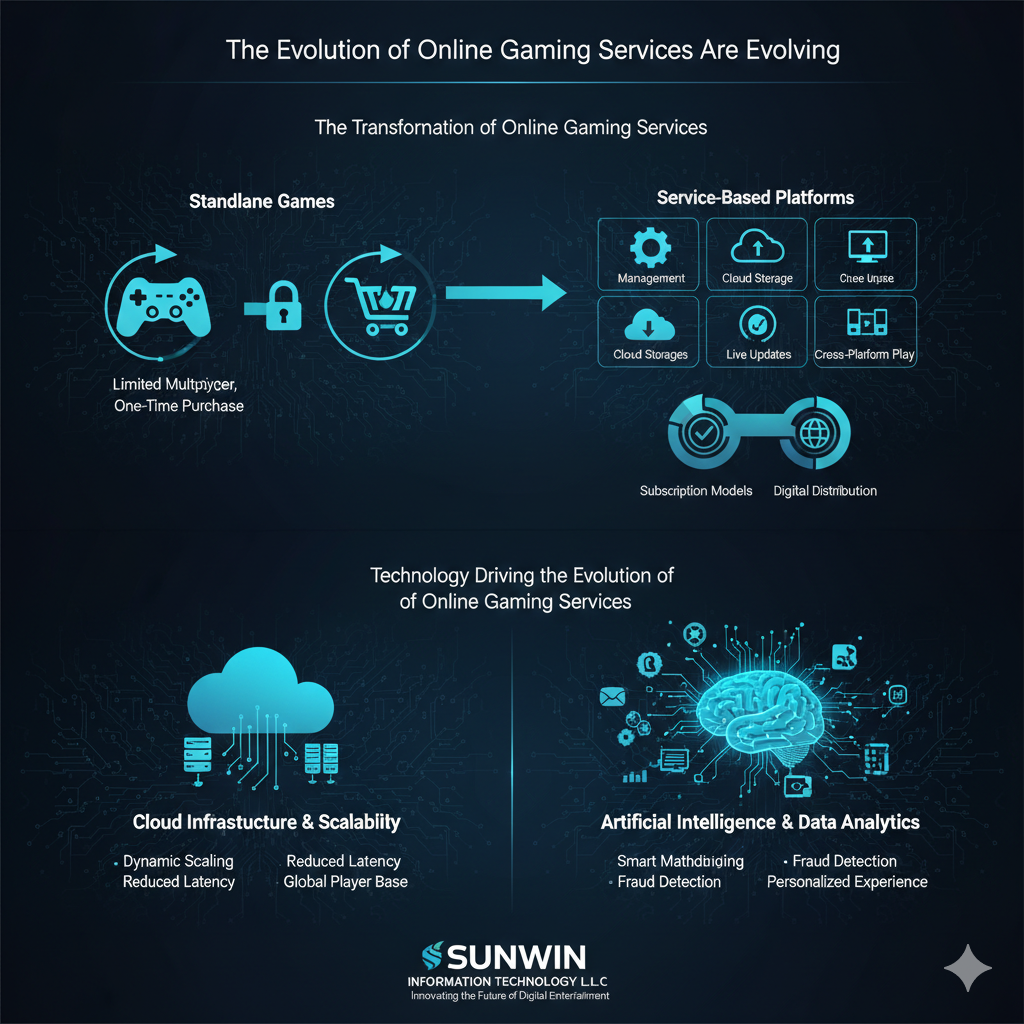
In the past, online gaming primarily focused on connecting players for multiplayer matches. Today, Online Gaming Services operate as full-service platforms that support account management, cloud storage, live updates, and cross-platform play.
This shift from product-based games to service-based ecosystems allows developers to maintain long-term relationships with players while continuously improving content and performance.
Subscription Models and Digital Distribution
Subscription-based access has become an important part of modern Online Gaming Services. Players increasingly prefer flexible access to large game libraries rather than purchasing individual titles.
Digital distribution platforms also enable faster updates, seamless patches, and global reach, reducing barriers for both developers and players.
Technology Driving the Evolution of Online Gaming Services
Cloud Infrastructure and Scalability
Cloud computing plays a central role in the evolution of Online Gaming Services. By leveraging cloud infrastructure, providers can scale servers dynamically to handle peak traffic, reduce latency, and ensure stable gameplay experiences.
Cloud-based systems also support global player bases, allowing online gaming services to operate efficiently across multiple regions.
Artificial Intelligence and Data Analytics
Artificial Intelligence (AI) and data analytics are increasingly integrated into Online Gaming Services. AI helps optimize matchmaking systems, detect fraudulent behavior, and personalize player experiences.
Data analytics provides valuable insights into player behavior, enabling service providers to improve retention, engagement, and monetization strategies.
Enhancing Player Experience and Engagement
Personalization and User-Centric Design
Modern Online Gaming Services prioritize personalization. Customized dashboards, tailored recommendations, and adaptive difficulty systems enhance user satisfaction and keep players engaged over time.
User-centric design ensures that services are intuitive, accessible, and optimized for both casual and competitive players, supported by continuous updates and understanding LiveOps and post-launch game support.
Social Features and Community Integration
Social interaction has become a core component of online gaming. Features such as in-game chat, friend systems, live streaming integration, and community events are now standard within Online Gaming Services.
These features transform gaming into a shared experience, strengthening player communities and increasing platform loyalty.
Security, Compliance, and Responsible Gaming
Advanced Security Measures
As online platforms grow, security becomes increasingly critical. Online Gaming Services must protect user data, prevent cheating, and ensure fair play.
Advanced encryption, secure payment gateways, and real-time monitoring systems help maintain trust and platform integrity.
Regulatory Compliance and Responsible Gaming
Regulatory requirements for online gaming vary across regions. Service providers must comply with licensing laws, data protection regulations, and responsible gaming standards.
Responsible gaming tools such as spending limits, age verification, and self-exclusion features are now essential elements of sustainable Online Gaming Services.
Monetization and Business Model Innovation
Flexible Monetization Strategies
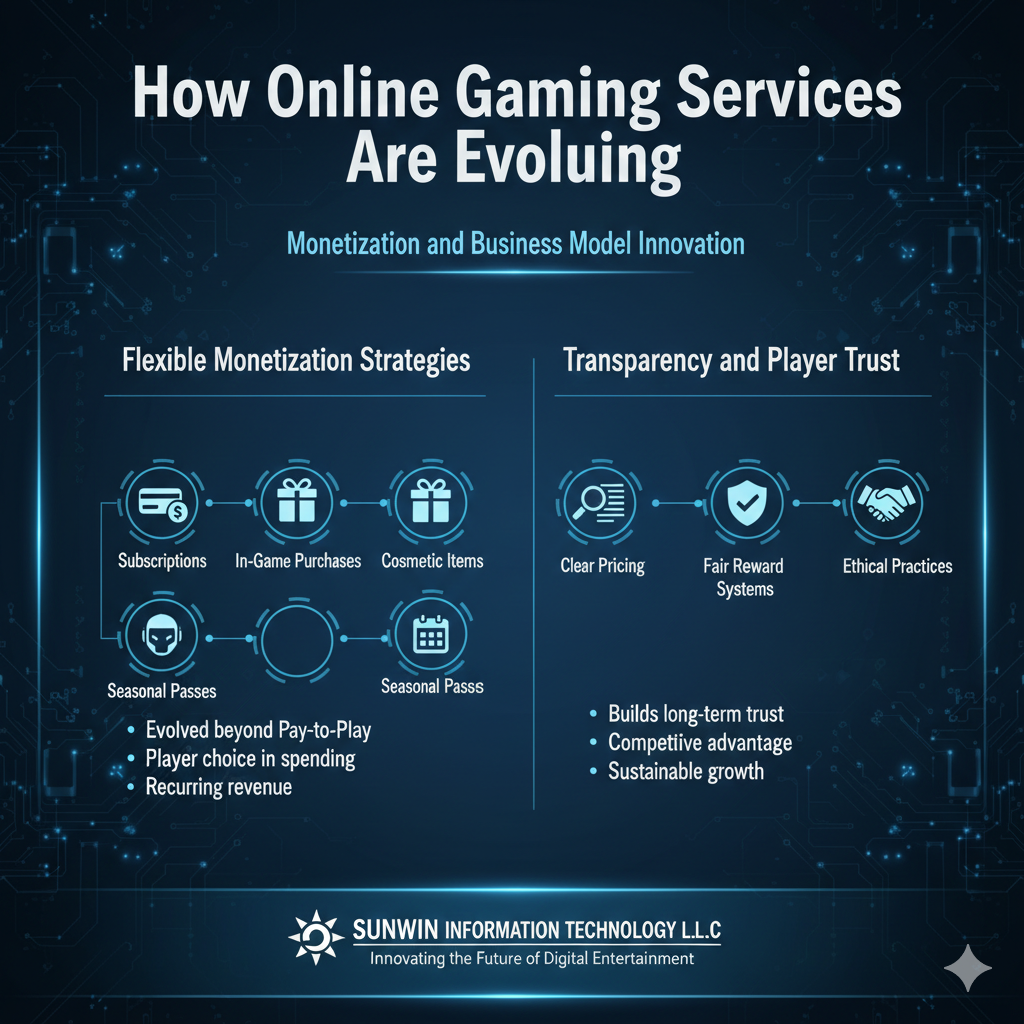
Monetization within Online Gaming Services has evolved beyond traditional pay-to-play models. Common strategies now include subscriptions, in-game purchases, cosmetic items, and seasonal passes.
These flexible models allow players to choose how they spend while enabling service providers to generate recurring revenue, reinforcing the principles behind what makes a successful online game service.
Transparency and Player Trust
Players today demand transparency. Clear pricing, fair reward systems, and ethical monetization practices are becoming competitive advantages for online gaming platforms.
Building trust is critical for long-term success in the evolving online gaming services market.
The Future of Online Gaming Services
Integration of Emerging Technologies
Emerging technologies such as virtual reality (VR), augmented reality (AR), and blockchain are expected to further transform Online Gaming Services. These innovations promise more immersive experiences, secure digital ownership, and decentralized gaming ecosystems.
While adoption is gradual, their long-term impact on online gaming services is significant.
Long-Term Growth and Sustainability
The future of Online Gaming Services depends on sustainable growth, technological adaptability, and player-focused strategies. Providers that invest in robust infrastructure, innovation, and compliance will be best positioned to succeed.
Conclusion
The evolution of Online Gaming Services reflects broader changes in technology, player behavior, and digital entertainment. From cloud infrastructure and AI-driven personalization to social integration and responsible gaming, online gaming services are becoming more sophisticated and interconnected. By staying aligned with these trends and delivering scalable technology solutions, SUNWIN INFORMATION TECHNOLOGY L.L.C continues to support the advancement and long-term sustainability of the global online gaming ecosystem.